
Is your organization stuck in a content rut – recycling the same blog posts, social media updates, or email blasts? If so, you might be missing out on higher engagement, better SEO rankings, and stronger brand awareness.
The good news? You don’t need to get rid of your existing content – you just need to work on your content strategy .
In this post, we’ll explore:
- Why diversifying content matters
- How to choose the right formats for your audience
- B2B vs. B2C content strategies
- Pro tips to maximize engagement
Let’s dive in!
The Problem with a ‘One Size Fits All’ Content Strategy
Today’s digital landscape offers endless platforms – blogs, social media, podcasts, newsletters, videos. But trying to master them all is a recipe for burnout.
Did You Know?
- It takes 7+ brand interactions before a customer makes a purchase
- The average human attention span is now shorter than a goldfish’s (just 8.25 seconds!)
This means that your content must be engaging, valuable, and easy to digest – fast.
Step 1: Know Your Audience
Before creating content, you need to know:
- Who is my ideal audience? (Demographics, interests, pain points)
- Where do they consume content? (LinkedIn? Instagram? Email?)
- What type of content do they prefer? (Long-form articles? Info-graphics? Short videos?)
Sample Audience Breakdown
| Audience Type | Preferred Platforms | Best Content Formats |
|---|---|---|
| Business – to – Business (B2B) | LinkedIn, Email, Newsletters | Whitepapers, Case Studies, Podcasts |
| Business – to – Consumers (B2C) | Instagram, TikTok, Email | Short Videos, Polls, User-Generated Content |
Step 2: Choose the Right Content Format
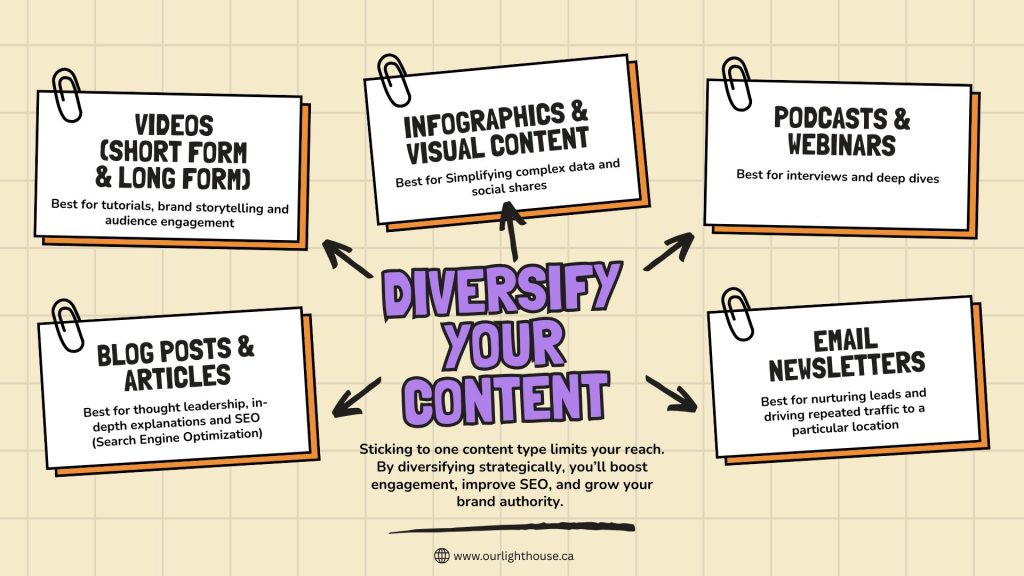
1. Blog Posts & Articles
Best for: thought leadership, in-depth explanations, SEO (Search Engine Optimization)
Example: A software developer publishing a guide on “How to Automate Your Workflow.”
2. Videos (Short Form & Long Form)
Best for: tutorials, brand storytelling, audience engagement
Example: A fitness coach posting 60-second workout clips on Instagram Reels.
3. Case Studies & Testimonials
Best for: Building trust, showcasing results
Example: A marketing agency highlighting a client’s 200% Return on Investment (ROI) from their campaign.
4. Infographics & Visual Content
Best for: Simplifying complex data, social shares
Example: A nonprofit turning annual impact statistics into an eye catching infographic.
5. Email Newsletters
Best for: Nurturing leads, driving repeated traffic
Example: An online store sending exclusive discounts to subscribers.
6. Podcasts & Webinars
Best for: Interviews, Deep dives
Example: A tech company hosting a webinar on trending AI platforms.
Step 3: Match Content Format to Business Type
Business to Business (B2B) Content Strategy
Goal: Educate, nurture leads, establish authority
Popular Formats: Whitepapers, Webinars, LinkedIn articles, Case studies
Business to Consumer (B2C) Content Strategy
Goal: Entertain, inspire, encourage quick decisions
Popular Formats: Instagram/TikTok videos, Polls & quizzes, User-generated content (UGC), Limited time offers
Step 4: Repurpose & Optimize Content
Don’t reinvent the wheel; repurpose your exisiting content to maximize reach.
- Turn a blog post into a video script.
- Convert a webinar into a LinkedIn carousel.
- Use customer testimonials in email campaigns.
Pro Tip:
Search engines (like Google) rank content based on:
- Website traffic
- Time spent on page
- Social media presence
So, cross-post your content across platforms!
Conclusion: Content Diversity = Better Results
Sticking to one content type limits your reach.
Therefore:
- Know your audience’s preferences
- Develop a robust content strategy
- Experiment with different formats
- Focus on 2 to 3 high impact platforms
- Re-purpose content efficiently
Follow these steps and you’ll boost engagement, improve your digital reach, and grow your brand authority.
What’s Next?
In our upcoming post, we’ll cover content strategies for nonprofits so that they can mobilize supporters, raise more funds, and drive change.
See you in the next article! ????